2026/10/28 Number of clicks:
India’s expanding rooftop solar market, rising electricity demand, and growing focus on energy security are creating new opportunities for energy storage. For residential energy storage providers, the key is to turn solar adoption into practical, reliable, and economically attractive home energy solutions.
1. Market Overview: India’s Energy Transition Is Creating New Storage Demand
India is becoming an increasingly important market in the global energy transition. Rapid electricity demand growth, renewable energy expansion, and government-backed clean energy initiatives are reshaping the country’s power sector.
Solar energy is at the center of this transformation. However, solar generation does not always align with household electricity consumption. Power generated during the day may exceed immediate demand, while electricity consumption often continues into the evening and nighttime.
Battery energy storage systems (BESS) can help bridge this gap by storing available energy for later use, improving energy flexibility and supporting a more reliable power supply.
The scale of India's energy storage ambition is significant. According to India's Ministry of Power, the projected battery energy storage requirement is approximately 47.24 GW / 236 GWh by 2031–32. This reflects the growing importance of storage in supporting renewable energy integration and grid reliability.
However, this national target primarily reflects broader power-system requirements rather than residential battery demand alone. The residential opportunity should therefore be assessed through rooftop solar adoption, household energy needs, electricity tariffs, and local installation economics.
2. Rooftop Solar Growth Is Expanding the Residential Storage Opportunity
India's rooftop solar sector is gaining momentum, supported by the PM Surya Ghar: Muft Bijli Yojana, a national initiative designed to accelerate residential rooftop solar adoption.
By August 2026, the scheme had surpassed 5 million rooftop solar installations, with approximately 14.8 GW of rooftop solar capacity commissioned under the program.
This expansion creates a growing base of households already investing in solar energy. As these installations mature, some homeowners may consider battery storage to increase self-consumption, maintain access to essential electricity during outages, or improve control over household energy use.
Three developments are particularly relevant:
A growing installed base: More solar-equipped homes provide a potential customer base for battery storage upgrades and integrated solar-plus-storage solutions.
Greater interest in energy independence: Households may seek to reduce reliance on grid electricity and maintain essential loads during supply interruptions.
Demand for integrated solutions: Consumers and installers increasingly need compatible combinations of solar generation, battery storage, inverters, and energy management systems.
Nevertheless, rooftop solar adoption does not automatically translate into battery demand. Subsidy eligibility, electricity export arrangements, battery costs, local grid conditions, and household consumption patterns all influence purchasing decisions.
For residential storage providers, the opportunity lies in identifying the customer segments where storage delivers a clear, measurable benefit.
3. Key Drivers of Residential Energy Storage Demand
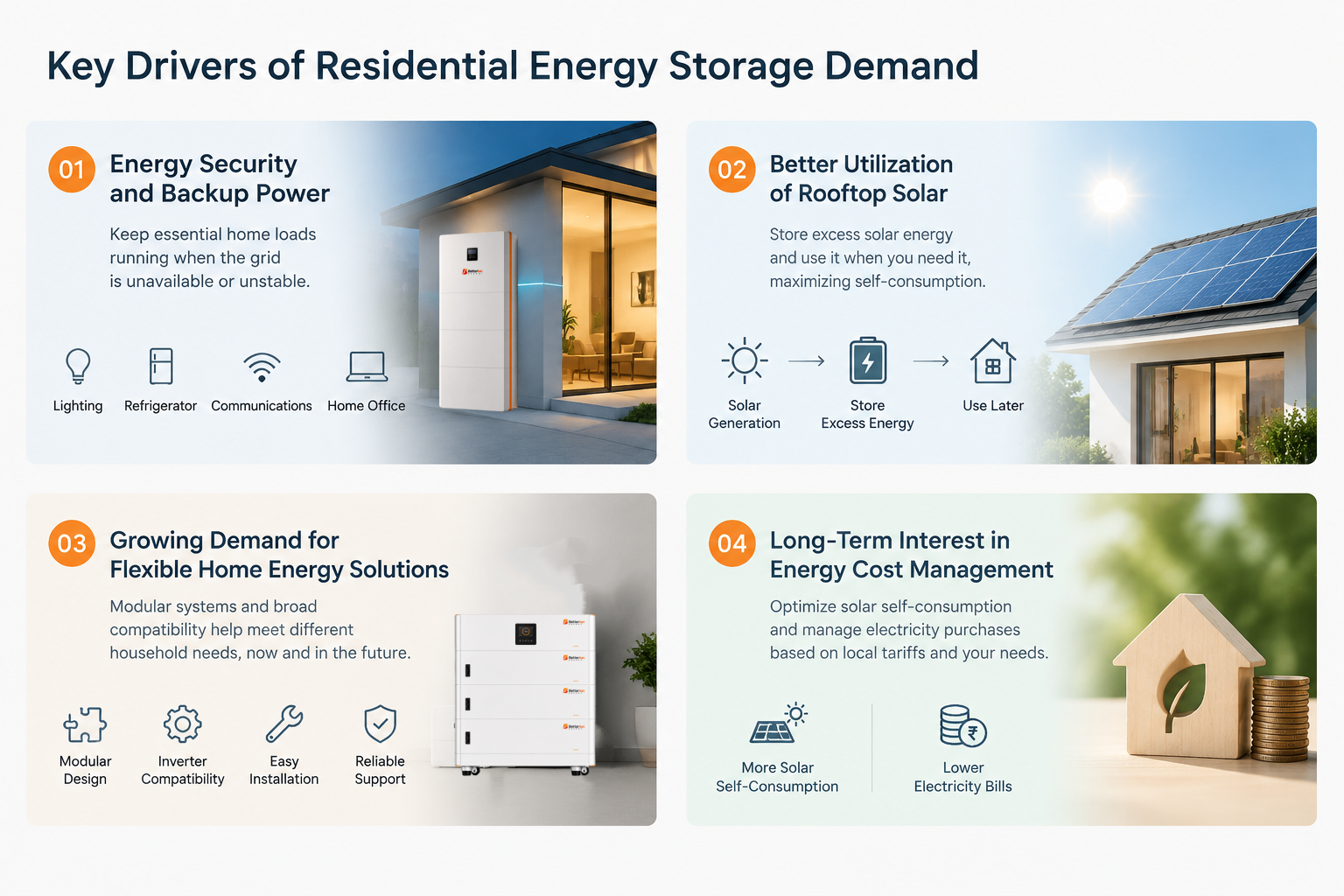
3.1 Energy Security and Backup Power
Reliable electricity is an important consideration for households, particularly where interruptions or voltage fluctuations affect daily activities.
A residential battery system can support selected essential loads, such as lighting, refrigeration, communications equipment, and home office devices, depending on system capacity and configuration.
For households that value continuity of power supply, storage offers an additional benefit beyond solar electricity generation: greater control over when stored energy is available.
The commercial message should focus on dependable backup for defined household needs rather than promising uninterrupted whole-home power under every condition.
3.2 Better Utilization of Rooftop Solar
Solar generation typically peaks during daylight hours, while many households experience substantial electricity demand in the evening.
A battery can store excess solar generation and release it later, increasing the share of solar energy consumed within the home.
The economic benefit depends on local retail electricity tariffs, export compensation, system efficiency, battery degradation, and the household's daily load profile.
For solar installers, this creates an opportunity to offer battery storage as an upgrade to suitable existing installations or as part of a new solar-plus-storage package.
3.3 Growing Demand for Flexible Home Energy Solutions
As household energy consumption evolves, homeowners may need systems that accommodate different load profiles, future capacity expansion, and changing energy requirements.
Modular battery systems can help installers design solutions around individual household needs rather than relying on a single fixed configuration.
For manufacturers, product flexibility, inverter compatibility, installation simplicity, and dependable after-sales support can be important differentiators in a competitive market.
3.4 Long-Term Interest in Energy Cost Management
Energy storage may help households optimize solar self-consumption and manage electricity purchases. However, the financial case is not identical across India.
In regions where grid electricity is relatively affordable and solar exports receive favorable compensation, battery payback may be less attractive. Where backup power is highly valued or the difference between electricity import and export rates is substantial, the economics may be more favorable.
A credible market strategy should therefore prioritize customer segments with identifiable needs and demonstrate savings using local electricity tariffs and realistic system assumptions.
4. Regional Market Considerations
India should not be approached as a single, uniform residential energy storage market. Solar adoption, electricity tariffs, grid reliability, climate conditions, installer networks, and purchasing power vary considerably by state and distribution utility.
The following regions offer useful starting points for market assessment.
Gujarat: Solar Adoption and Clean Energy Ecosystems
Gujarat is an important state to evaluate for solar-related business opportunities, supported by its broader renewable energy ecosystem and established industrial base.
Potential residential storage customers include solar-equipped households seeking backup power or greater control over their energy consumption. Installer partnerships and compatibility with existing solar systems may be important routes to market.
Maharashtra: Diverse Residential and Urban Demand
Maharashtra combines major urban centers, established commercial activity, and varied residential electricity needs.
Potential opportunities include premium residential properties, solar-equipped homes, and households looking for backup solutions. Customer segmentation is essential because electricity costs, housing types, and installation conditions differ significantly across the state.
Karnataka: Renewable Energy Adoption and Technology-Oriented Customers
Karnataka is worth evaluating for residential solar-plus-storage solutions, particularly in markets where consumers value energy management, sustainability, and greater energy autonomy.
Solar installers, electrical contractors, and specialized energy solution providers may serve as important channel partners.
Rajasthan: High Solar Potential and Regional Installation Opportunities
Rajasthan's strong solar resource makes it relevant to solar energy development and related services.
Residential battery demand, however, must be evaluated separately from utility-scale solar potential. Household economics, local electricity arrangements, installation conditions, and backup requirements should determine where residential storage is commercially viable.
Market entry recommendation: These states should be treated as candidates for channel and customer research, not as a definitive ranking of residential battery demand. Before committing resources, manufacturers should validate installer activity, local tariffs, competitive pricing, and customer conversion potential in each target market.
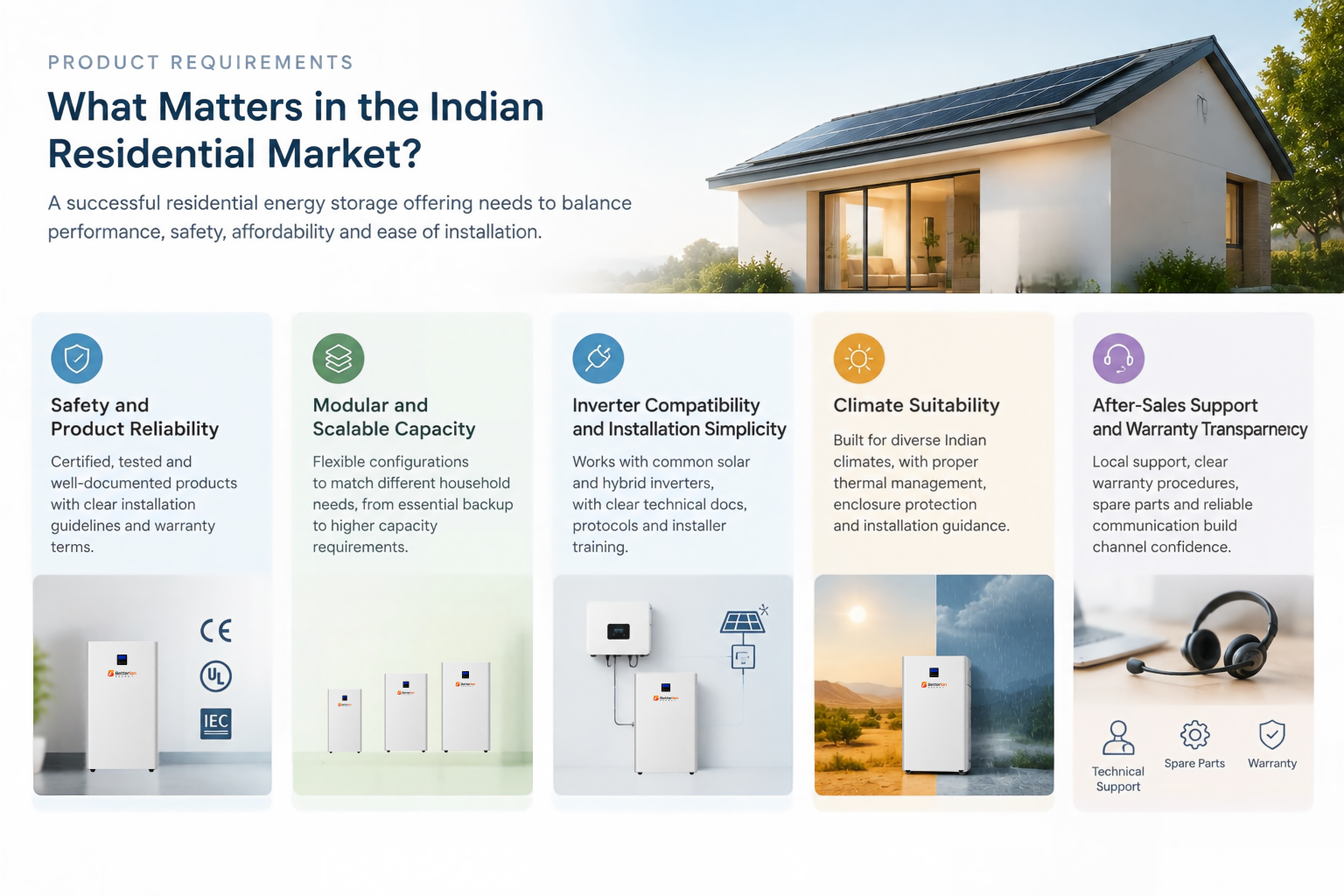
5. Product Requirements: What Matters in the Indian Residential Market?
A successful residential energy storage offering needs to balance performance, safety, affordability, and ease of installation.
Safety and Product Reliability
Battery safety is a fundamental purchasing consideration for homeowners, installers, and distribution partners. Manufacturers should provide relevant product test reports, applicable certifications, clear installation instructions, and transparent warranty terms.
Certification requirements should be confirmed for the specific product, intended application, and Indian regulatory pathway before market launch.
Modular and Scalable Capacity
Different homes have different energy consumption patterns. A smaller system may be suitable for essential backup loads, while a larger household may require greater usable capacity and output power.
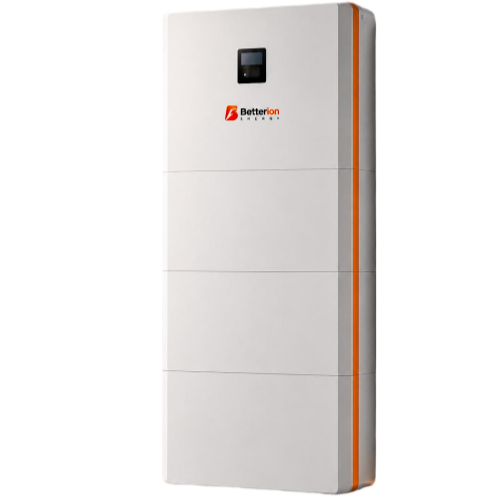
Modular configurations can support a broader range of applications, provided expansion is supported by the product design and compatible system components.
Inverter Compatibility and Installation Simplicity
Compatibility with commonly deployed solar and hybrid inverters is an important consideration for both new installations and retrofit projects.
Clear technical documentation, communication protocols, wiring guidance, and installer training can reduce integration challenges and help channel partners deploy systems more efficiently.
Climate Suitability
India's diverse climate conditions make operating temperature, thermal management, enclosure protection, and installation guidance important evaluation criteria.
Product suitability should be assessed against actual site conditions and the manufacturer's specified operating limits rather than relying on general claims of climate resistance.
After-Sales Support and Warranty Transparency
Local distributors and installers need accessible technical support, clear warranty procedures, spare-parts arrangements, and dependable communication with the manufacturer.
For overseas suppliers entering India, channel confidence and service readiness can be as important as product specifications.
6. Market Entry Challenges and Considerations
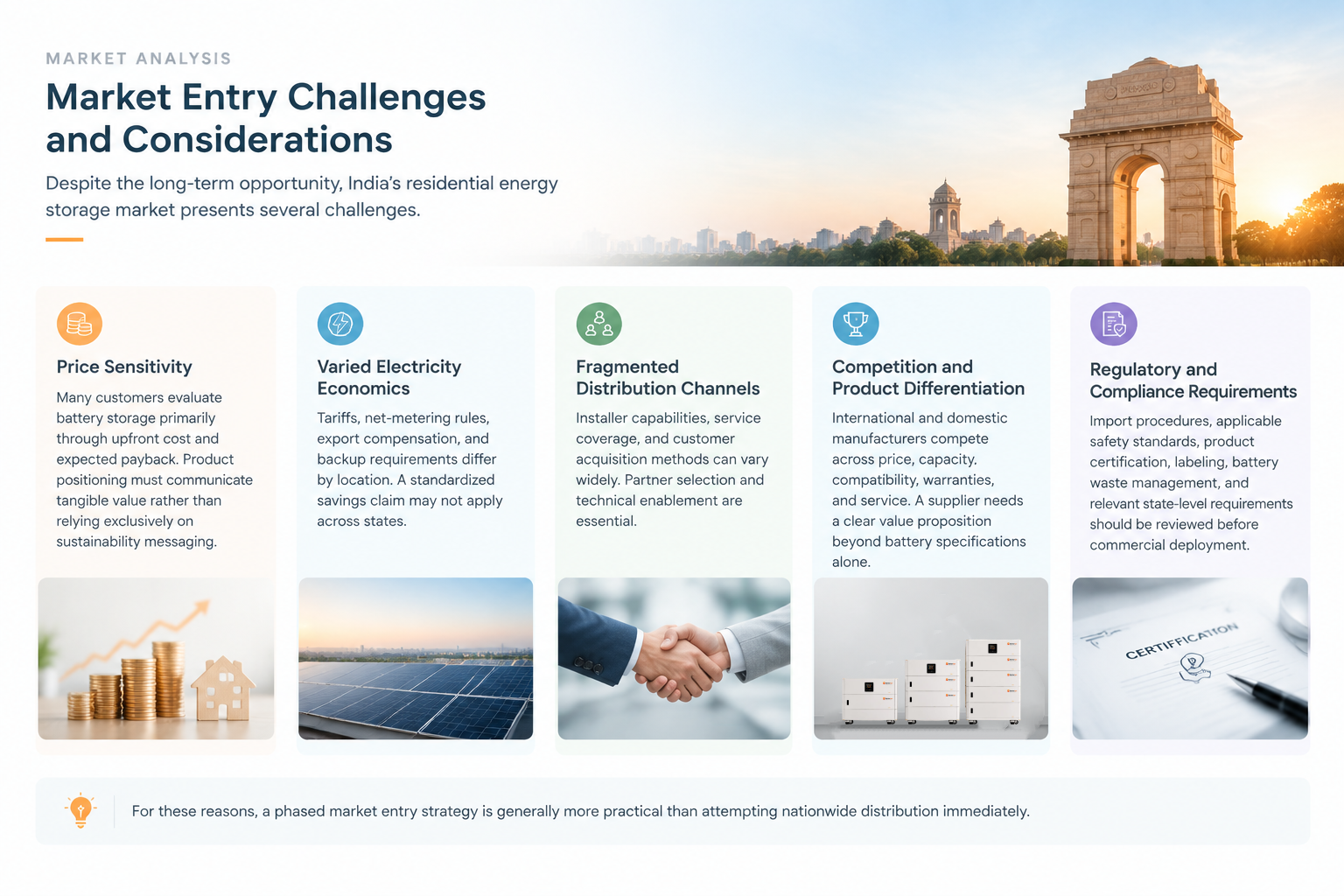
Despite the long-term opportunity, India's residential energy storage market presents several challenges.
Price sensitivity: Many customers evaluate battery storage primarily through upfront cost and expected payback. Product positioning must communicate tangible value rather than relying exclusively on sustainability messaging.
Varied electricity economics: Tariffs, net-metering rules, export compensation, and backup requirements differ by location. A standardized savings claim may not apply across states.
Fragmented distribution channels: Installer capabilities, service coverage, and customer acquisition methods can vary widely. Partner selection and technical enablement are essential.
Competition and product differentiation: International and domestic manufacturers compete across price, capacity, compatibility, warranties, and service. A supplier needs a clear value proposition beyond battery specifications alone.
Regulatory and compliance requirements: Import procedures, applicable safety standards, product certification, labeling, battery waste management, and relevant state-level requirements should be reviewed before commercial deployment.
For these reasons, a phased market entry strategy is generally more practical than attempting nationwide distribution immediately.
7. Recommended Market Entry Strategy for Residential Storage Providers
Phase 1: Validate Demand and Select Priority Segments
Start with structured research into target states, residential solar installations, electricity tariffs, backup power needs, and competing products.
Interview local installers and distributors to understand which customer groups are willing to pay for storage, what capacity ranges are preferred, and which technical barriers prevent sales.
Phase 2: Build a Reliable Local Channel
Identify solar installers, electrical contractors, regional distributors, and integrated energy solution providers with established customer relationships.
Develop a partner toolkit that includes product specifications, installation guidance, system compatibility information, warranty policies, sales materials, and customer education content.
Phase 3: Localize Product Positioning and Marketing
Build market-facing content around practical use cases:
Solar self-consumption and evening energy use
Backup power for essential household loads
Modular storage solutions for different household needs
Battery safety, reliability, and installation considerations
Total system value and realistic cost analysis
Localized English content and appropriate regional-language materials can help improve communication with different customer segments.
Phase 4: Test, Measure, and Scale
Launch pilot projects with selected channel partners before expanding distribution.
Track qualified inquiries, installer engagement, quotation conversion, installation success, customer feedback, and after-sales response times.
Use the results to refine product configurations, pricing, partner selection, and marketing investment.
8. What India's Energy Storage Transition Means for Betterion Energy
For Betterion Energy, India's residential solar expansion represents a market worth evaluating through a focused, partner-led approach.
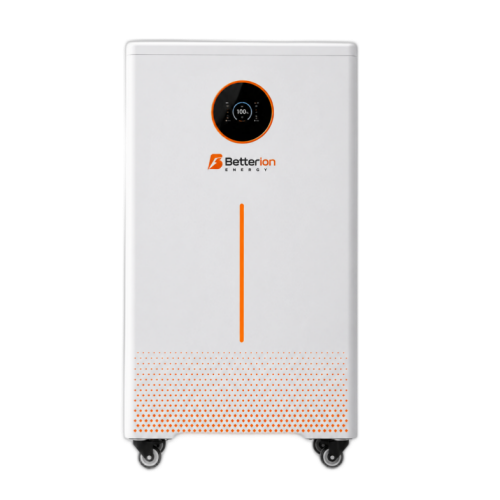
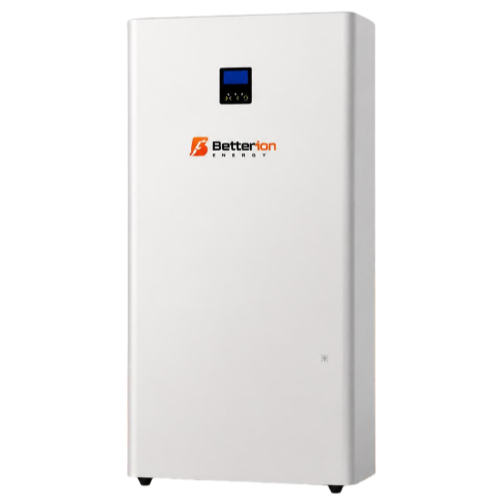
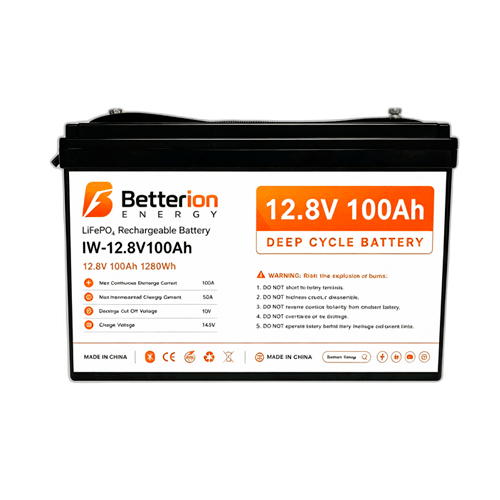
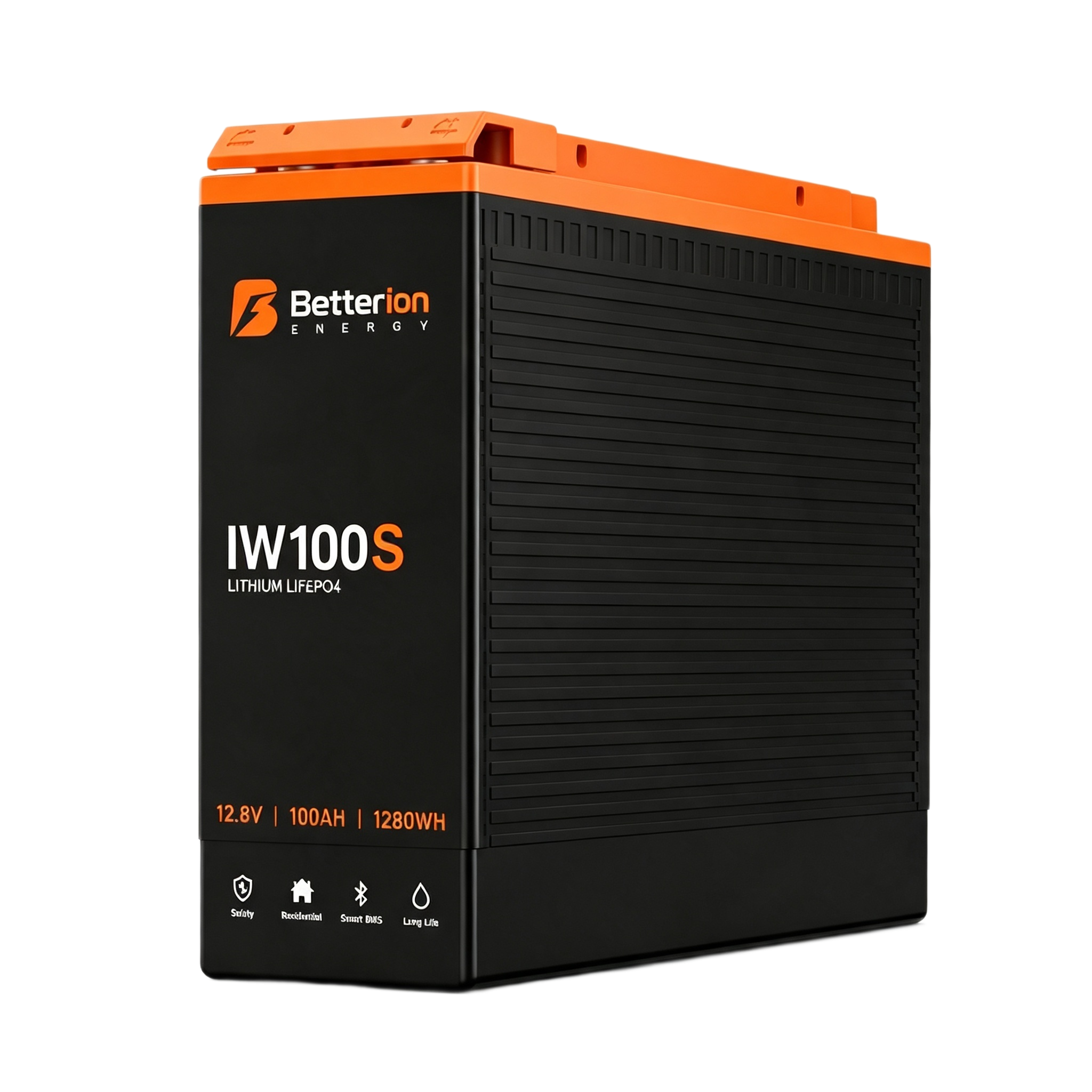
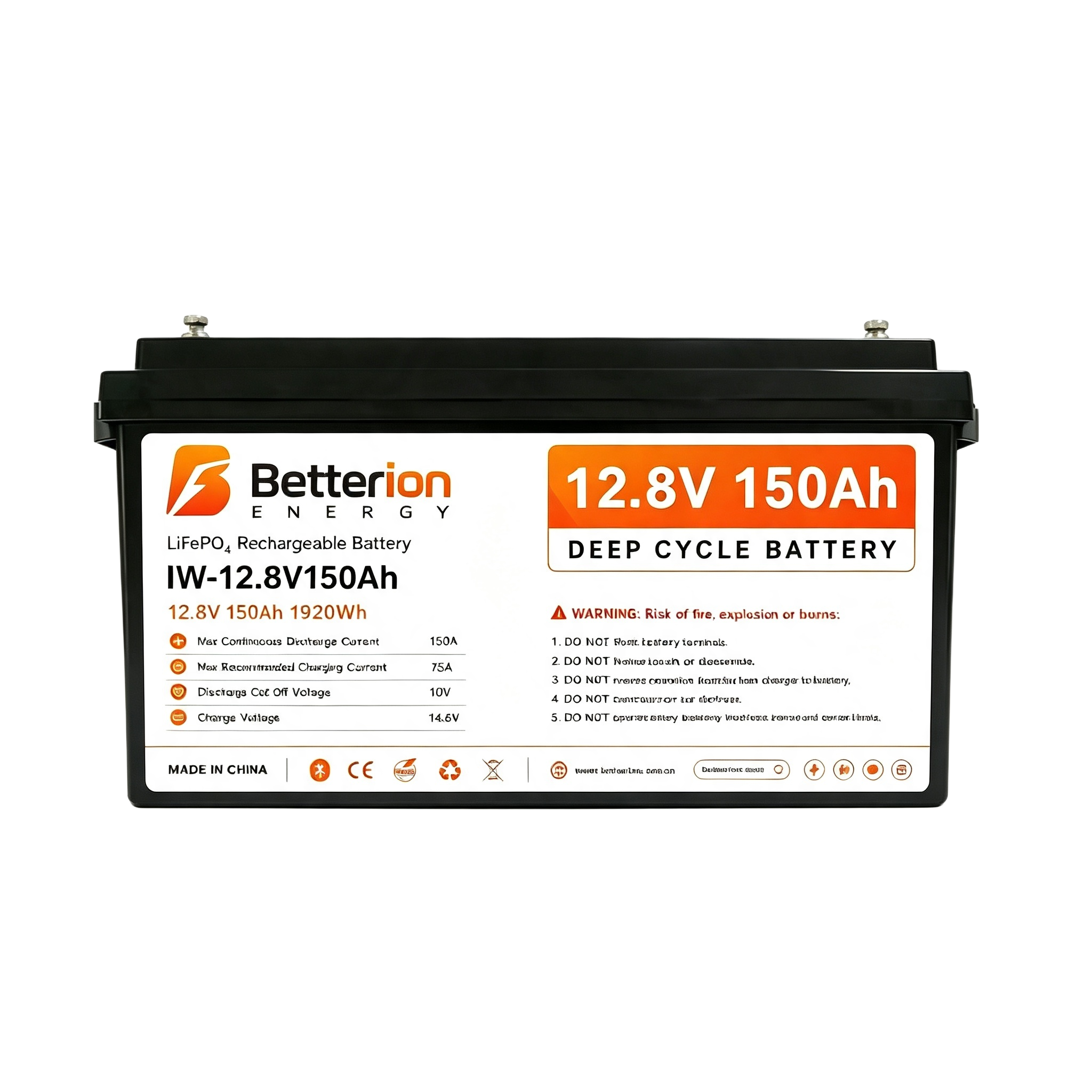
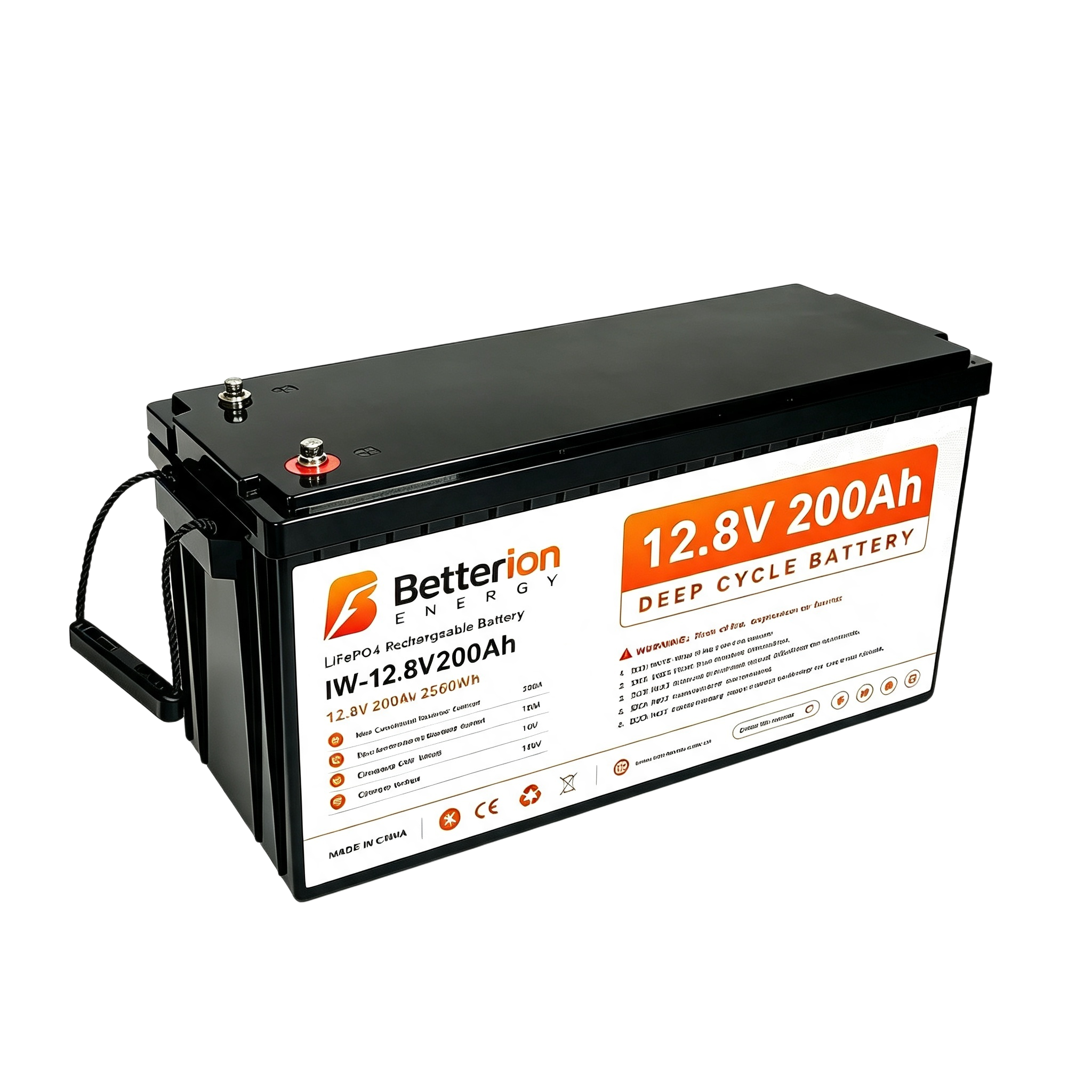
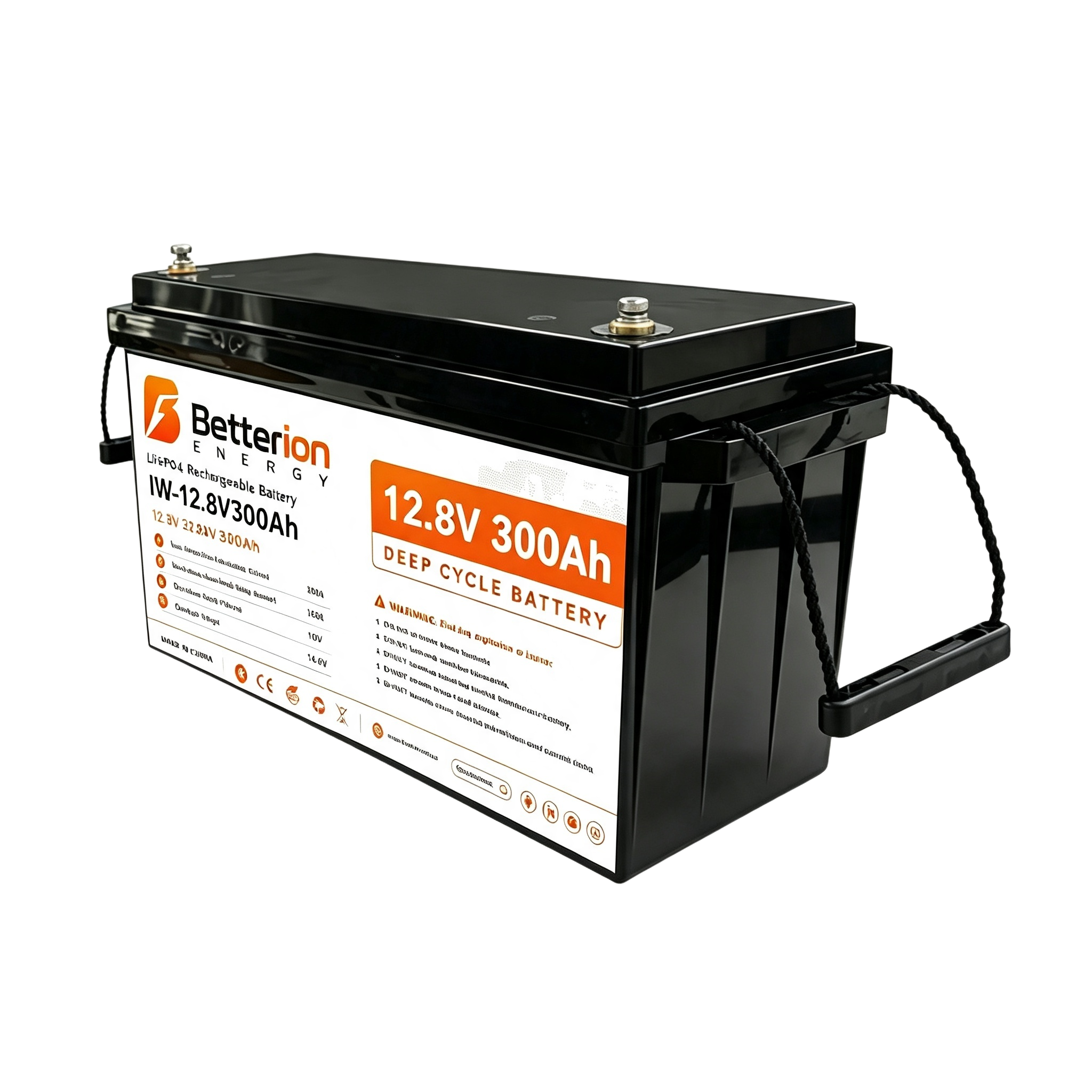
As a provider of residential energy storage solutions, Betterion can position its offering around the practical needs of homeowners and installers: reliable energy storage, flexible system configurations, safe operation, and integration with suitable solar systems.
Potential areas of opportunity include:
Residential solar-plus-storage: Solutions designed to store available solar energy for later household use.
Backup power applications: Configurations designed around essential household loads and defined backup requirements.
Modular storage systems: Capacity options that can accommodate different residential consumption profiles.
Installer and distributor partnerships: Cooperation with local partners that understand installation practices, customer needs, and regional market conditions.
Technical and educational resources: Clear product documentation and market-specific content that help partners explain system value to prospective customers.
Rather than pursuing broad market coverage from the outset, Betterion can begin by validating a small number of priority regions and customer segments, establishing dependable channel partnerships, and building evidence from pilot installations.
This approach can help connect market opportunity with actual purchasing behavior, product suitability, and long-term customer satisfaction.
9. Outlook: From Solar Adoption to Smarter Home Energy Management
India's energy transition is creating a broader need for flexibility, reliability, and more effective use of renewable electricity.
The rapid expansion of rooftop solar provides a meaningful foundation for residential energy storage, but market growth will depend on whether battery systems deliver clear value for specific households and installation partners.
For manufacturers and distributors, the next stage is not simply to promote batteries. It is to develop integrated, commercially viable solutions that address real energy needs, meet local requirements, and can be supported reliably over time.
Betterion Energy believes that smarter home energy storage begins with understanding local demand and delivering reliable solutions for everyday energy needs. By combining appropriate product design, trusted channel partnerships, and practical customer education, residential storage providers can participate in India's evolving clean energy market.

Add:Room 705, Building 1, Shenhui Building, Bantian Subdistrict, Longgang District, Shenzhen , Guangdong
Tel: +86-755-84861394
E-mail: admin@betterion.com.cn
Subscribe To Our Newsletter